
A new regulation concerning the disclosure of family arrangements by listed companies is exacerbating rifts between feuding shareholders. The latest example is Bengaluru-based TD Power Systems (TDPS), currently enmeshed in a legal dispute before the Karnataka high court over ownership of its 16 per cent equity. Vijay Kirloskar, who is asserting a claim over the 16 per cent stake held by Mohib Khericha (chairperson of TDPS) and Nikhil Kumar (managing director of TDPS and nephew of Kirloskar), has sent a letter to the market regulator, Securities and Exchange Board of India (Sebi), and stock exchanges. He accuses TDPS of insufficient disclosure concerning shareholder agreements.

The Securities and Exchange Board of India (Sebi) has proposed that at least 10 per cent of corporate bond market trades by foreign portfolio investors (FPIs) should be done on the request for quote (RFQ) platform. At present, most trades in the corporate bond market are over-the-counter (OTC), creating a lot of opacity. The markets regulator has been nudging debt market participants such as mutual funds (MFs), alternative investment funds (AIFs) and brokers to use the RFQ platform to boost secondary market liquidity and transparency.

The crucial hearing on the PILs by a bench headed by Chief Justice D Y Chandrachud assumes significance in the wake of recent developments in which the Centre agreed to the apex court's proposal to set up a committee, likely to be headed by a former Supreme Court judge, to look into the regulatory regimes.

Despite the much-hyped crackdown in the Initial Public Offer scam, market regulator Securities Exchange Board of India seems to have gone slow in addressing investor grievances against listed companies.

Reviving its IPO plan for the third time, realty major Lodha Developers has filed draft papers with market regulator SEBI for its proposed initial public offering to raise around Rs 2,500 crore, according to sources.

When billionaire Warren Buffet started his first fund in 1956 with eleven investors, he invested a token amount of $100 of his own money as "skin in the game". Buffet denies it but he is credited with coming up with the term describing those running a fund risk some of their own money in it. The mutual fund (MF) industry has more than Rs 81,200 crore riding on its schemes, shows a Business Standard analysis of data on sponsor and associate contributions from the Association of Mutual Funds in India (Amfi).

Mutual funds' equity buying remained elevated for the fifth consecutive month in December, taking the net equity purchase past Rs 1.7 trillion in 2023. The aggressive buying in December indicates that flows into equity funds are likely to have remained unaffected by the sharp run-up in the market last month. Mutual funds (MFs) bought equities worth Rs 23,000 crore last month (until December 28) compared to Rs 18,000 crore in November, shows data from the Securities and Exchange Board of India (Sebi).
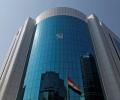
The Securities and Exchange Board of India (Sebi) has proposed new regulations to deal with suspicious trading activities-a move that will empower the market watchdog to go after entities making unusual profits without any fundamental basis. The regulator has issued a discussion paper, inviting feedback on the draft of the Sebi (Prohibition of Unexplained Suspicious Trading Activities in the Securities Market) Regulations, 2023, which are aimed at curbing front-running, use of mule accounts, pump and dump schemes, and misuse of social media influencers. Currently, Sebi's Prohibition of Fraudulent and Unfair Trade Practices (PFUTP) and Prohibition of Insider Trading (PIT) Regulations deal with such activities.

Billionaire Mukesh Ambani on Thursday unveiled the next phase of growth at Reliance Industries Ltd, with retail and telecom worth over $100 billion each, doubling revenues and pre-tax profit in 3-4 years, new energy business becoming profitable by 2031, and core oil and chemical business continuing to be the robust growth engine. The sprawling conglomerate with interests in refining, oil and gas, petrochemicals, telecom, retail, and media is on track to more than double in size before the end of the decade, Ambani, chairman and managing director of Reliance, told company shareholders.

Reliance Group chairman Anil Ambani on Friday resigned as director of Reliance Power and Reliance Infrastructure, following markets regulator Sebi order restraining him from associating with any listed company. "Anil D Ambani, non-executive director, steps down from the board of Reliance Power in compliance of SEBI (Securities and Exchange Board of India) interim order," Reliance Power said in a BSE filing. In a separate filing to the stock exchange, Reliance Infrastructure said that Anil Ambani has stepped down from its board "in compliance of SEBI interim order".

The mutual fund (MF) industry had an action-packed 2023 as it tackled the scrapping of tax benefits for debt fund investors and surging flows into equity funds.
The government is considering allowing investment by foreign institutional investors in the print media within the 26 per cent ceiling allowed for foreign direct investment, Rajya Sabha was informed on Monday.
The government on Thursday issued an ordinance for setting up a full-fledged Pension Fund Regulatory and Development Authority akin to Insurance Regulatory and Development Authority and Securities Exchange Board of India.

In other IPOs, the minimum dilution to the public will be 25 per cent, or Rs 400 crore, whichever is lower.

'Clients deemed higher-risk are required to update their KYC more frequently.'

Foreign portfolio investors (FPIs) are likely to get a reprieve from the Securities and Exchange Board of India (Sebi) in case of a passive or unintended breach of the thresholds that trigger additional disclosure norms. According to sources, FPIs whose single group exposure exceeds 50 per cent of their corpus will get 10 trading days to bring down their exposure below the prescribed level, without triggering the stricter disclosure norms. If total equity exposure of an overseas fund exceeds Rs 25,000 crore and it doesn't wish to provide additional disclosures, it will have three months to pare its exposure.
A single market regulator clearly has its own advantages over multiple regulators. But it is more suitable for well-developed and mature markets which are smaller in size, like the UK.

India's leading commodity exchange, National Commodity and Derivatives Exchange (NCDEX), and private weather forecasting company Skymet took a significant step towards launching the country's first tradeable weather index on Monday (August 14) by entering into an agreement to deepen their understanding of the impact that weather has on agricultural commodities. The memorandum of understanding (MoU) between NCDEX and Skymet is a profound step in the direction of linking farmers with the weather in a scientific way, according to an official statement. Sources indicate that NCDEX and Skymet will conduct workshops and seminars across the country to educate farmers about how they can scientifically use weather forecasts to hedge risks.

Those who cannot bear significant downturns (as much as 40 per cent) or have a short horizon should exit entirely.

The Indian entrepreneurship success story will soon see one more company debuting on the public markets. Ola Electric, the electric vehicle (EV) company, has become the first such firm that has filed its draft red herring prospectus (DRHP) with the Securities and Exchange Board of India for its initial public offering (IPO). This is a fresh issue of equity shares of up to Rs 5,500 crore and an offer for sale (OFS) of more than 95 million equity shares at a face value of Rs 10.

It is pouring heavily not only in North India, but at Dalal Street too. However, the latter is seeing a flurry of initial public offers (IPOs). After a busy fortnight that ended on July 7 with seven IPOs - IdeaForge Technology, Cyient DLM, PKH Ventures, Pentagon Rubber, Global Pet Industries, Tridhya Tech, and Synoptics Technologies -- four more IPOs will hit the Street this week, including one mainboard IPO of Utkarsh Small Finance Bank. That apart, India's largest securities' depository National Securities Depository Limited (NSDL) has filed its draft red herring prospectus (DRHP) with the Securities and Exchange Board of India (Sebi) for an IPO.

Mutual funds (MFs) turned net sellers of equities in April amid a run up in stock prices on sustained inflows from foreign portfolio investors (FPI). The benchmark indices, Sensex and Nifty50, logged their biggest monthly advance since November last year, gaining 3.6 per cent and 4.1 per cent last month. Data from the Securities and Exchange Board of India (Sebi) shows that MFs sold equities worth over Rs 5,100 crore in April, the highest since February 2021.

Bain Capital-backed Tyger Capital is planning to list its shares on the Indian stock exchanges by the next financial year and is targeting to grow its assets under management by four times to Rs 20,000 crore in five years from Rs 5,000 crore now, Gaurav Gupta, MD and CEO of the firm said. In an exclusive interview, Gupta said that keeping with the growing business, the finance company expects to on-board 600 people in the current financial year as it is opening 60-65 new branches for broad-basing its network in the country.

The state with the most people has displaced the state with the largest economy in terms of investor additions. Uttar Pradesh (UP) added 126,000 new investors in April, reveals National Stock Exchange (NSE) disclosures. This is higher than Maharashtra's 118,000. Maharashtra, which is home to India's financial capital of Mumbai, has traditionally been the biggest source of investors.

The move might delay the Gurugram-based hospitality unicorn's initial public offering (IPO). OYO filed preliminary documents with the Securities and Exchange Board of India (Sebi) in September 2021 for a Rs 8,430 crore IPO.

The government has exempted units of investment trusts and ETFs issued by entities based in GIFT City or traded in exchanges there from capital gains tax. The Central Board of Direct Taxes (CBDT) notified the exemption from capital gains tax any unit of investment trust; a unit of a scheme; and a unit of an Exchange Traded Fund (ETF) launched under the International Financial Services Centres Authority (Fund Management) Regulations, 2022. Gujarat International Finance Tec-City (GIFT)-IFSC is being promoted as a tax-neutral enclave for the financial sector.
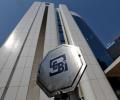
Capital markets regulator Sebi has penalised stock exchanges -- BSE and NSE -- for "laxity" on their part in detecting misuse of clients' securities worth Rs 2,300 crore by Karvy Stock Broking Ltd (KSBL). In two separate orders, the Securities and Exchange Board of India (Sebi) has imposed a fine of Rs 3 crore on BSE and Rs 2 crore on NSE. The matter relates to KSBL misutilising client securities worth Rs 2,300 crore, belonging to more than 95,000 clients, by pledging them from just one demat account. The funds raised against the pledge were used by KSBL for itself and its group entities.
You could invest if you have missed the earlier rally, you could churn your portfolio to move towards better quality stocks or funds and you could even clear your loans by some profit booking
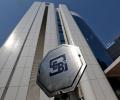
Days before Sony Group pulled the plug on the $10 billion deal, Zee group founder Subhash Chandra had written to Finance Minister Nirmala Sitharaman, blaming Sebi for trying to "scuttle" the merger of its flagship media firm Zee Entertainment Enterprise with the Japanese firm and subsequent investment in the merged entity. Alleging market regulator Sebi is "acting with a predetermined mind", the Zee group patriarch requested the finance minister to take the necessary steps "to safeguard the interest of the minority shareholders of Zee". Chandra in his letter dated January 16, seen by PTI, said Zee and all other people have been cooperating in the investigation related to the alleged fund diversion by promoters and expressed concern over a new notice issued by the market regulator to former directors of Zee.

Fundraising via initial public offers (IPOs) dropped 52.2 per cent to $147.2 billion in the first eight months of calendar year 2023 (CY23), suggests a recent report by GlobalData, a London-based analytics and consulting company. At the country level, the report suggests, India topped the charts with 152 transactions worth $3.8 billion during this period, primarily due to a higher number of SME IPOs, followed by the US with 99 deals totaling $16 billion, while China ranked third with 88 transactions worth $32.3 billion. "An analysis of GlobalData's Deals Database reveals that there were 750 IPO listings registered with an aggregate deal value of $147.2 billion in the first eight months of 2023 on the stock exchanges worldwide.

The Securities and Exchange Board of India (Sebi) has for the first time proposed to regulate online platforms offering fractional ownership in real estate, a model already popular in countries like the United States and UAE. In a consultation paper floated recently, the capital markets regulator stated that such fractional ownership of real estate assets was proposed to be brought as MSM (micro, small, medium) REITs under Sebi (Real Estate Investment Trusts) Regulations. This model allows investors to own a fraction or a small share in a real estate asset like buildings and office spaces, which could include warehouses, shopping centres, conference centres.

New-age tech tools and 'mystery shoppers' are helping the country's top bourse stay ahead of the curve against dabba trading platforms and entities dolling out unsolicited investment tips. In the past one month, the National Stock Exchange (NSE) has issued close to two dozen warnings and advisories against such activities. "We saw a rise of dabba trading or illegal trading platforms after the pandemic.
A list of 25 companies that are suspected to be operating bogus demat accounts has been handed over to market regulator SEBI by Investor Grievance Forum demanding a probe into their operations.

Mutual funds (MFs) have stepped up equity purchases after staying on the fence for over two months. Their net equity investments reached a four-month high of Rs 7,700 crore in July, rising for the fourth consecutive month after withdrawing a net of Rs 5,100 crore in April 2023. This trend continued in August, with net investments of Rs 3,400 crore in the first three trading sessions, according to data from the Securities and Exchange Board of India.

Since March 2020, when the Nifty50 plummeted to 7,511 following the announcement of a nationwide lockdown, the stock market has been on an upward trajectory. Over the next four years, the major market index has delivered a remarkable compounded annual growth rate (CAGR) of over 31.5 per cent. In the past year alone, the Nifty50 has gained by 27 per cent, hitting a succession of record highs.

It could be a matter of concern that foreign shareholders of the NSE are registered in tax havens such as Mauritius and Cyprus.

Sebi had given the exchanges a 2-year window to comply or exit.

Brokers have requested for a three-month extension from the Securities and Exchange Board of India (Sebi) for the validation of Know Your Client (KYC) records. In a letter to Sebi, industry body -- Association of National Exchanges Members of India (Anmi) -- has cited various issues and concerns raised by its members that have hampered the smooth completion of the validation process within the stipulated timeline. The Sebi circular had given KYC Registration Agencies (KRAs) a timeline of 180 days, ending on April 30, 2023, to validate client KYCs.
 © 2026 Rediff.com - Advertise with us - Disclaimer - Privacy Policy - Sitemap - Feedback - About us - Terms of use - Grievances